Donald Duke: Tinubu Is No Average Politician, Opposition Must Unite Ahead of 2027
Peoples Redemption Party (PRP) presidential candidate and former Cross River State governor Donald Duke has warned opposition parties that President Bola Tinubu is not an opponent
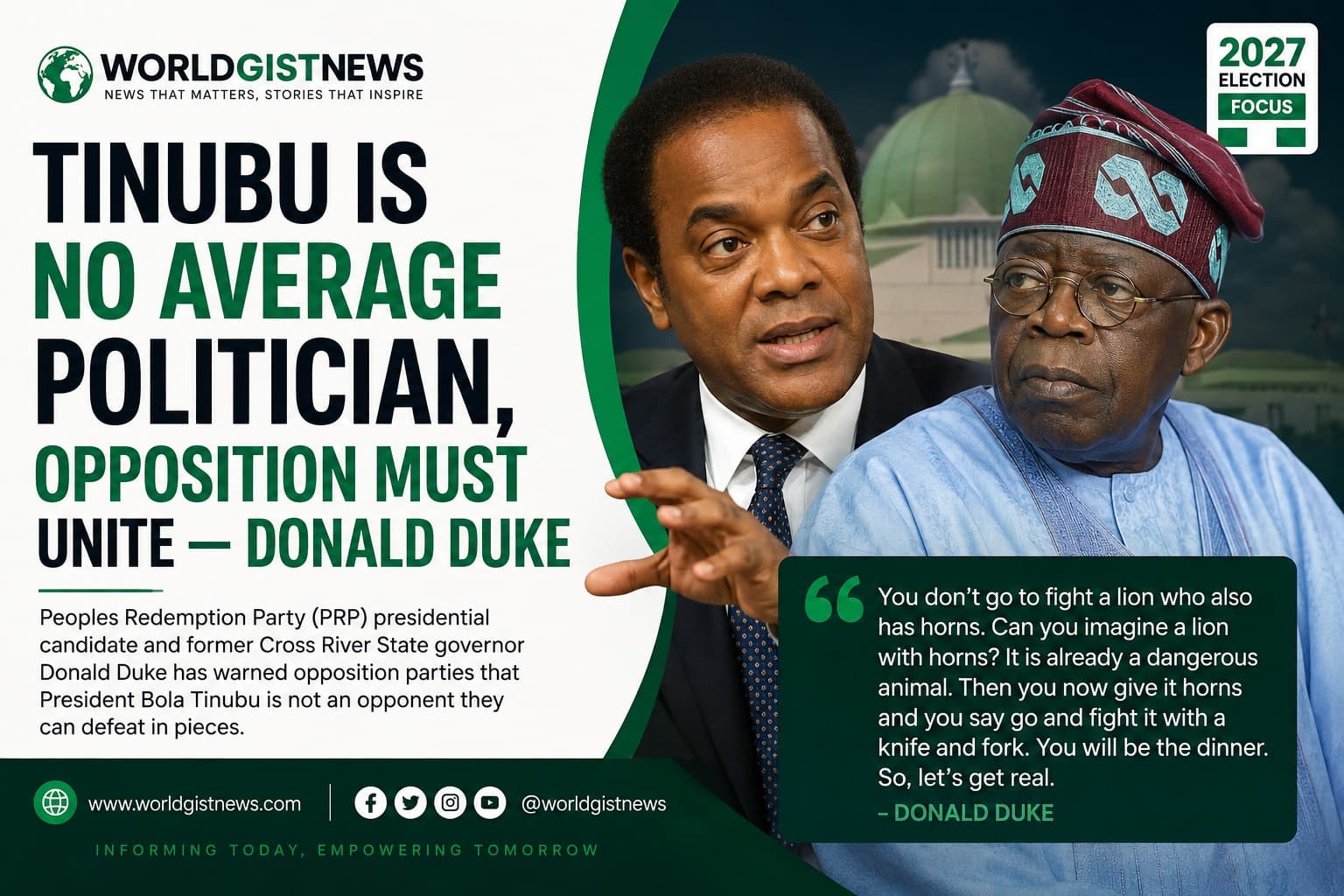
Peoples Redemption Party (PRP) presidential candidate and former Cross River State governor Donald Duke has warned opposition parties that President Bola Tinubu is not an opponent they can defeat in pieces. Speaking in an interview with Symfoni TV’s Naija Unfiltered, Duke said the 2027 contest will not be won by scattered ambitions. Incumbency, he argued, already tilts the field toward the ruling All Progressives Congress (APC). Institutions answer first to the man in power. If trouble breaks out on election day, he said, the Inspector-General of Police will not consult rival candidates. He will go to the president. “Everything is skewed in favour of the incumbent. Respect that,” Duke said. That is why he is pressing for a single opposition front. Fragmentation, in his view, is a form of self-sabotage. “The only way you can seriously tackle the incumbent is to come together and have a voice; otherwise we will be factionalised. So when you talk of rigging, I think we are rigging it against ourselves because of our ego. We need to come together.” He then delivered the line now circulating across Nigerian papers: Tinubu is not an average politician. “You don’t go to fight a lion who also has horns. Can you imagine a lion with horns? It is already a dangerous animal. Then you now give it horns and you say go and fight it with a knife and fork. You will be the dinner. So, let’s get real.” The warning lands just ahead of an opposition gathering convened by the G100 in Abuja. Duke has previously said he re-entered the presidential race not to split votes but to help pull a splintered opposition toward one purpose. In earlier remarks he argued that Nigeria’s opposition often shares a goal—change—while refusing the discipline needed to achieve it. His case is strategic, not sentimental. A sitting president controls security architecture, patronage networks, and the daily machinery of government. A field of rival opposition tickets, each chasing the same anti-incumbent vote, multiplies that advantage. Duke’s point is that ego is doing part of the incumbent’s work for him. Whether other leading figures—across ADC, Labour Party, and smaller platforms—accept that logic will shape the next year of opposition politics. Duke is not asking them to admire Tinubu. He is asking them to stop treating him like an ordinary target. The lion-with-horns line is colourful. The underlying argument is blunt: without a united force, the opposition risks becoming the dinner.
Related Stories